
By Canopy Tree Care · 4 min read
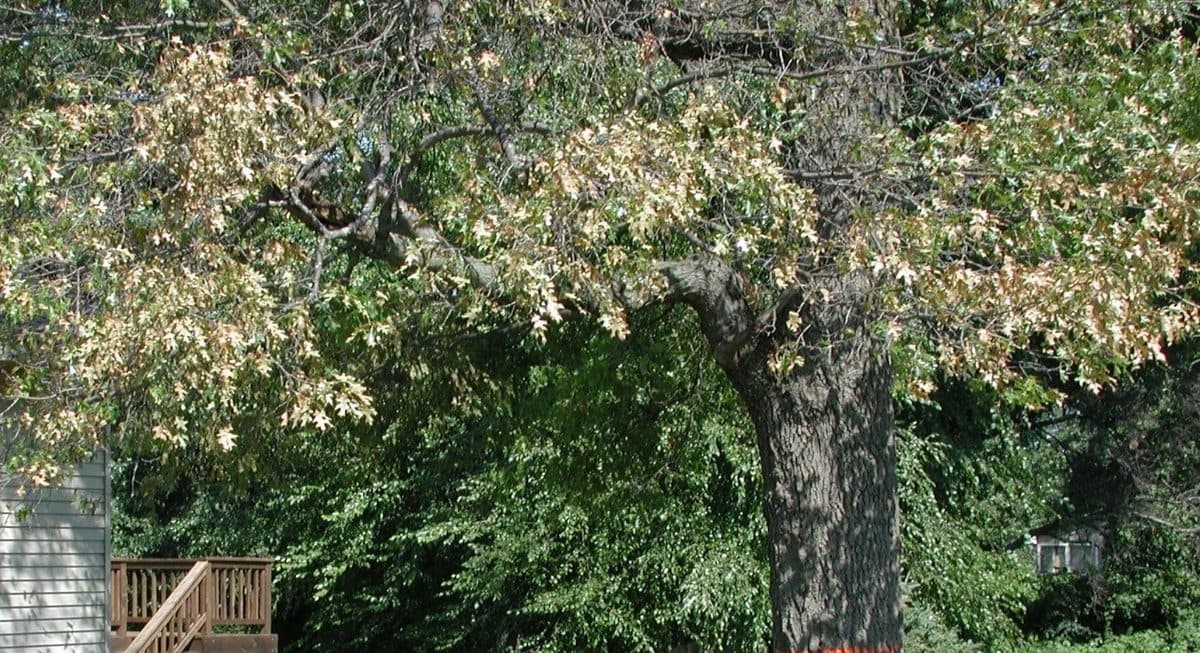
Oak wilt is one of the most serious diseases affecting oak trees in Wisconsin. It blocks the tree's ability to move water, causing leaves to wilt and turn brown surprisingly fast.
Red oaks are especially vulnerable. A healthy-looking red oak can go from showing its first symptoms to dying within a matter of weeks.
The good news is that knowing what to look for can help you catch a problem early. And when it comes to oak wilt, timing matters.
How Does Oak Wilt Spread?
Oak wilt can spread in a couple of different ways, and both are important for homeowners to understand.
The disease can move from tree to tree through connected root systems. When oak roots grow together underground, the fungus can travel from an infected tree into nearby healthy oaks.
Oak wilt can also spread through small insects that carry fungal spores from infected trees to fresh wounds on healthy oaks.
That's why fresh pruning cuts can be a concern during the warmer months. If you have oak trees on your property, it's important to think about when pruning or other tree work is done.
Signs of Oak Wilt to Watch For
Oak wilt doesn't always look the same from tree to tree, but there are a few warning signs worth knowing.
Look for:
- Leaves turning brown or bronze starting near the top of the tree
- Leaves wilting or dropping earlier than expected
- Leaves that appear to have lost their normal green color
- Branches dying back unexpectedly
- Several nearby oak trees showing similar symptoms
Red oaks can decline quickly once they're infected. White oaks tend to respond differently and may survive for several years while showing more gradual symptoms.
If you notice unusual browning or leaf loss on an oak, it's worth having the tree looked at rather than waiting to see what happens.
Why We Don't Prune Oaks in Spring
When it comes to oak trees, timing matters.
The Wisconsin Department of Natural Resources recommends avoiding pruning and other activities that create fresh wounds on oak trees during the months when oak wilt can spread most easily.
For homeowners, the simple takeaway is this: don't schedule routine oak pruning during the high-risk season unless there's a safety reason that requires immediate work.
If a storm damages an oak or a branch becomes a hazard, don't leave it alone just because it's the wrong time of year. Safety comes first. An arborist can help determine the safest way to handle the situation.
What If My Oak Already Has Oak Wilt?
If you think an oak on your property may have oak wilt, don't panic, but don't wait too long to have it checked.
There isn't a simple cure for an oak that's already heavily infected. In some cases, removing the affected tree and addressing the connections between nearby oak trees can help prevent the disease from spreading further.
Every property is different. The location of the tree, nearby oaks, the severity of the symptoms, and the overall health of the tree all matter.
If you're not sure what's happening with your oak, having an experienced arborist take a look is a good place to start.
Worried About an Oak Tree?
Not sure whether the browning leaves you're seeing are normal or a sign of oak wilt? Give us a call. We'll take a look at the tree, explain what we're seeing, and help you understand your options.